Food safety in commercial hot-holding operations is not primarily a technology question. It is a process question, with technology as one of the tools that supports the process. When we talk about Cook-e's food safety capabilities, we are careful to frame them as design intent rather than compliance claims, because food safety compliance in commercial operations is jurisdiction-specific, inspector-specific, and dependent on the operator's broader food safety management system, which is outside our control.
With that framing stated, here is what Cook-e's sensor chain actually does in relation to food safety, and how it was designed with HACCP-aligned holding temperature requirements in mind.
What HACCP says about hot holding
HACCP (Hazard Analysis and Critical Control Points) is the framework most commonly applied in commercial food service in EU member states, UK, and many other jurisdictions. Under HACCP, hot holding is identified as a Critical Control Point (CCP) for cooked food: the moment when cooked food is held prior to service is a control point at which pathogen growth can occur if temperature falls below a safe threshold.
The general industry guidance, reflected in UK Food Standards Agency guidance and in many EU member state food safety regulations, specifies a minimum hot holding temperature of 63 degrees celsius. Some jurisdictions specify 60 degrees celsius. The US Food and Drug Administration Food Code specifies 57 degrees celsius (135 degrees fahrenheit) as the minimum. These figures represent the temperature below which pathogen growth becomes a concern for most cooked food types over typical holding durations.
The standard commercial approach to documenting this control point is the manual temperature check: a probe thermometer is inserted into a food item at intervals (typically every two hours in busy operations), the temperature is recorded on a log sheet or in a digital system, and the log is available for inspection. This is the most common practice in staffed commercial food operations today.
The problem with manual temperature logs in unattended operations
Manual temperature logging depends on a person being present and performing the check at the required intervals. In a staffed operation, this is a routine part of the kitchen supervisor's duties. In an unattended operation, by definition, nobody is present to perform manual checks.
This is the core food safety challenge for any unattended hot food service: how do you document that the holding temperature was maintained at the required minimum throughout the service window when there was no person present to check it?
Some operators address this by using a holding cabinet with a basic data-logging thermostat: the cabinet records its internal air temperature at a set interval and that log can be exported. This is better than nothing, but it measures the cabinet's air temperature, not the food's surface temperature, and the two differ, particularly immediately after loading when cold food temporarily reduces the local temperature at the tray surface.
How Cook-e's temperature monitoring works
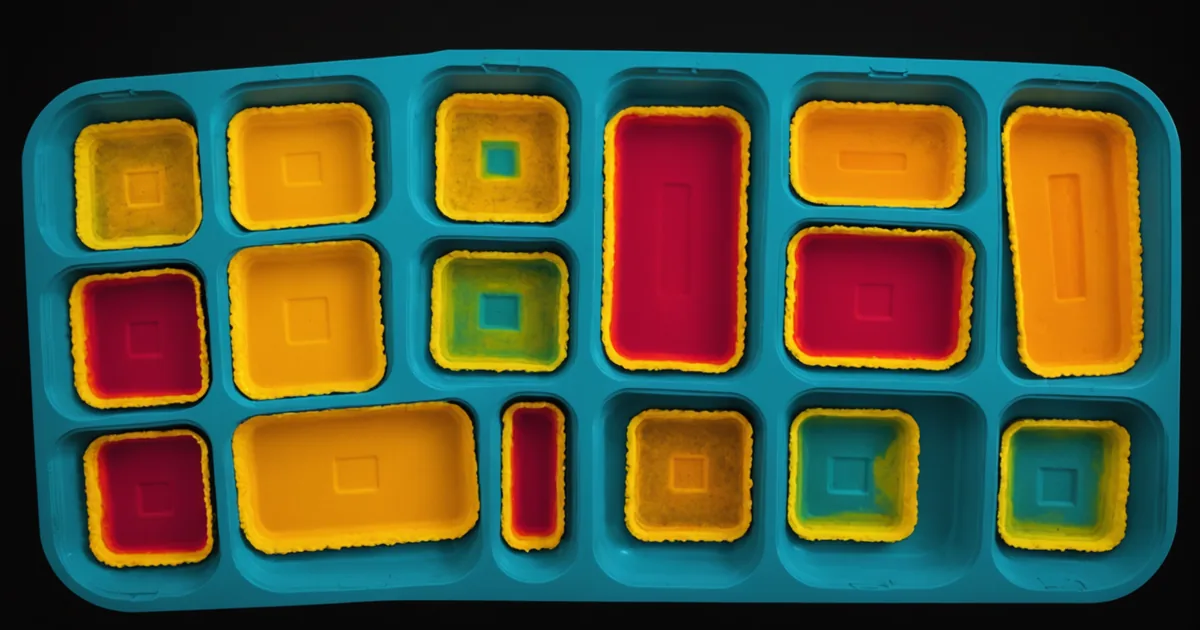
Cook-e's thermal monitoring is based on contact-type temperature sensors at each tray shelf position, not a single air temperature sensor. The sensor at each shelf position measures the temperature of the shelf surface, which is in thermal contact with the tray. This gives a more direct reading of the food environment temperature at the tray level than an air temperature sensor positioned in the cabinet's air volume.
The sensors log at 60-second intervals during operation. The log records timestamp, tray slot, and measured temperature. If any tray position drops below the configured minimum temperature threshold (which defaults to 63 degrees celsius and can be adjusted during commissioning within the range of 60 to 65 degrees celsius), the system generates an alert to the operator dashboard and, if configured, sends an SMS or email notification.
The log is retained on the cabinet's local storage and is also synced to the cloud dashboard when network connectivity is available. The export format is a CSV file with a row per measurement: timestamp, slot, temperature, status flag (normal/alert). This is structured to be useful for a food safety inspector who wants to verify that holding temperatures were maintained across a service window.
We are careful not to claim that this log is automatically sufficient to satisfy any specific jurisdiction's HACCP documentation requirements, because those requirements are set by local food safety authorities and we cannot warrant their interpretation of what constitutes adequate documentation. What we can say is that the log provides a higher-frequency, more consistent temperature record than manual two-hourly checks, and that it covers the full service window including any periods when no staff member was present.
The vision layer and food safety
Cook-e's visual classification system contributes to food safety in a specific and bounded way: it does not serve food that has not been classified as ready. An item that has not reached the visual classification threshold for its food type will not trigger the hold window timer, and an item that has not been flagged as ready by the system should not be served.
This is not a substitute for cooking food to a safe core temperature before it enters the cabinet. The cabinet is a holding and monitoring system, not a cooking system. Food safety during the cooking step, prior to loading, is the operator's responsibility. The cabinet takes responsibility for the holding step: documenting temperature maintenance and classifying when items are in their service window.
We are not saying the vision system is a direct food safety control. We are saying it contributes to a tighter operational process: items that have not reached a visual ready state are not surfaced for service, which reduces the risk of inadvertently serving food that has not been adequately heated prior to loading. The primary food safety control remains the pre-loading cooking step and the temperature monitoring during holding.
What operators need to do on their side
Cook-e's sensor chain is designed to document the holding step. There are food safety responsibilities that remain with the operator and are not addressed by the cabinet's monitoring.
Food needs to be cooked to adequate core temperature before loading. This is outside the cabinet. The operator's food safety management system needs to address this step, whether through a central kitchen with documented cooking protocols, a sous vide process with documented time-temperature records, or another approach appropriate to their operation.
Restocking cadence and food handling hygiene during loading are the operator's responsibility. The cabinet monitors what is inside it; it does not monitor the loading process.
The cabinet's temperature sensor calibration should be verified periodically, using a calibrated reference thermometer to check that the logged temperature values are accurate. We recommend this as part of a quarterly maintenance check. The log is only as useful as the accuracy of the sensor producing it.
A practical perspective on what AI oversight means here
The phrase "AI oversight" in the context of food safety needs to be interpreted carefully. Cook-e's classification system is an automated decision layer that determines when food is in its service window. It automates a judgment that would otherwise require a trained person at the pass. That is the correct frame for what it does.
It does not replace the food safety management system. It does not certify that food is safe. It does not have authority over the operator's food safety responsibilities under applicable law. What it does is provide continuous, automated monitoring of the holding step, document that monitoring in an auditable log, and prevent food from being flagged as service-ready until visual classification criteria are met. In an unattended operation, these capabilities are more valuable than they would be in a staffed one, because the alternative to automated oversight in an unattended operation is no oversight at all during the unstaffed period.
Operators considering Cook-e for environments with particular food safety regulatory scrutiny, such as healthcare facilities, schools, or other settings with vulnerable populations, should discuss the specific regulatory requirements for unattended hot food service with their local food safety authority before deploying. The cabinet is designed to support compliant operations; whether it satisfies the specific requirements of a given regulatory context is a question for that context's regulators, not for us to answer on their behalf.